Design GuideUpdated July 2026Glass Brick Walls
Glass Brick Wall Design Ideas For Hotels, Restaurants And Commercial Interiors
Glass brick walls are useful when an interior needs separation without losing light. For hotels, restaurants, spas, retail spaces and reception areas, they can create a boundary while still letting light, reflection and texture move through the space.
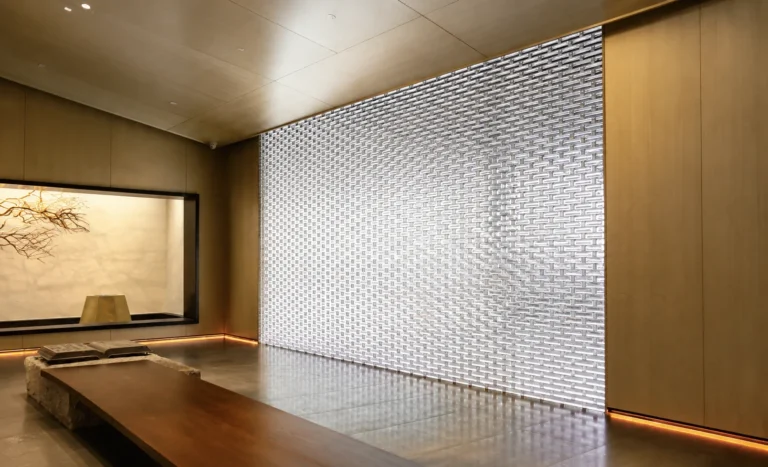
Customers may search for this category in different ways: glass brick, glass block, crystal brick or crystal glass brick. The wording can change by market and by project, so the most practical question is not only what to call it. The better question is how the wall should work inside the space.
This guide explains where glass brick walls work well, how to choose between a full wall, partition, feature wall or bar front, and what information to send before asking for a custom project review.
1. Where Glass Brick Walls Work Best
Glass brick walls are suitable for spaces that need both division and light transmission. They can be made clear, frosted, textured, bubbly or colored, depending on how much privacy and visual impact the project needs.
In a hotel lobby, a glass brick wall can become a large feature surface or a reception backdrop. It gives the space a strong visual identity without making the lobby feel closed.
In a restaurant, glass brick can divide seating areas or help enclose a semi-private dining room. It adds more atmosphere than a plain partition and more privacy than a fully open layout.
In a spa or wellness space, privacy becomes more important. Frosted, bubble-textured or strongly textured glass bricks can soften visibility while keeping the area bright.
In retail spaces, reception zones and corridors, glass brick can work as a backdrop, directional partition or local feature wall. The key is not simply whether glass brick can be used. The key is what job the wall needs to do.
2. Decide Whether It Is A Full Wall, Partition, Feature Wall Or Bar Front
After a customer finds a good reference image, the next step is not to ask for a price immediately. The first step is to define the role of the wall.
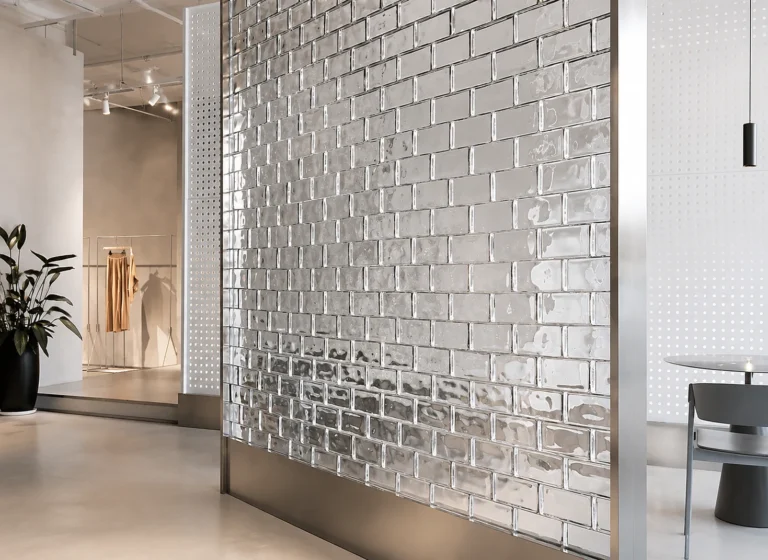
A full wall is closer to an architectural surface. It works well for lobbies, corridors, spas and large background areas. A partition is used to separate circulation, seating, private rooms, reception areas or open commercial spaces.
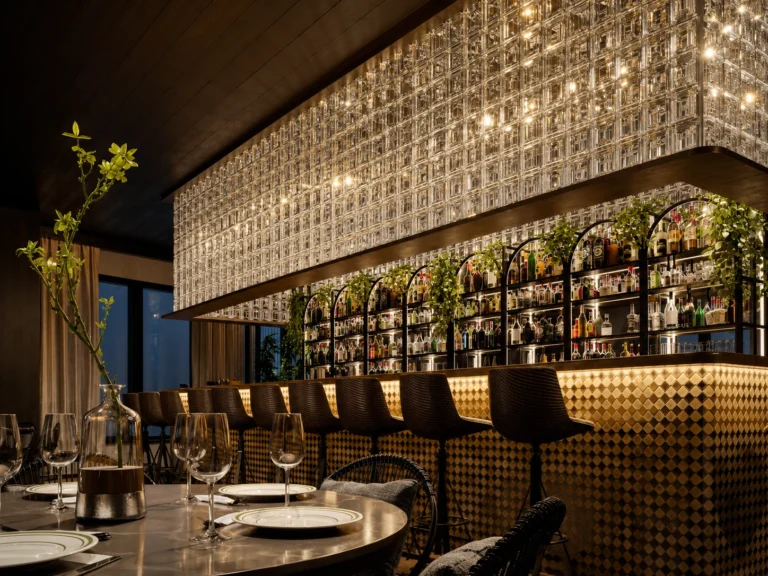
A feature wall is designed to be remembered. It is suitable for reception backdrops, display zones and photo-friendly interiors. A bar front or counter backdrop uses the refraction and lighting of glass brick to make a bar, restaurant counter or reception desk feel more layered.
These different uses affect dimensions, thickness, transparency, lighting, edge finishing and installation method. LMC can review the project drawing, reference image and site dimensions to help decide which direction is more suitable.
3. Glass Brick Can Be Clear, Textured, Colored Or Curved
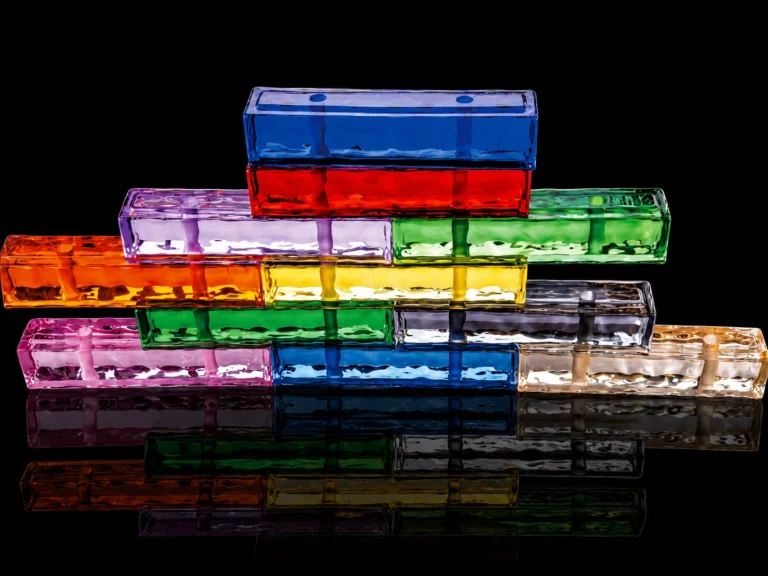
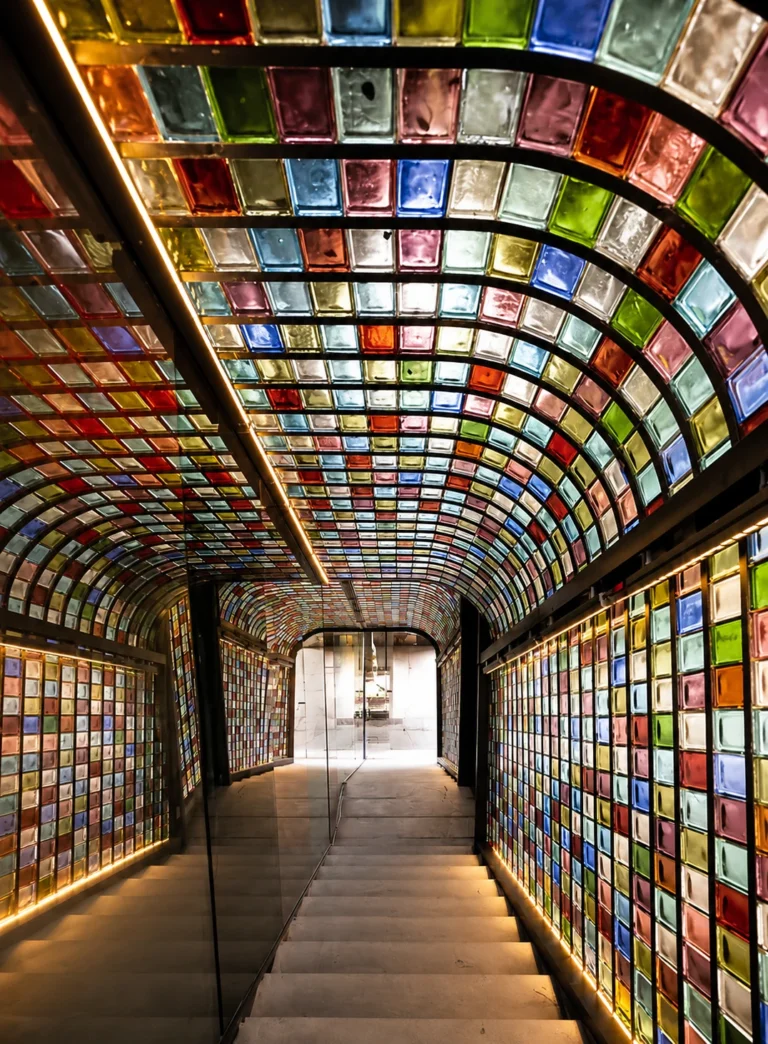
Many customers think glass brick only means a simple transparent square block. In custom projects, glass brick can have different colors, textures, transparency levels and surface effects. Curved glass bricks are also possible for curved walls, round columns and softer room boundaries.
Texture and color are not only decorative choices. Clear glass brick is better for bright, open spaces. Frosted or bubble-textured glass brick is better when privacy matters. Colored glass brick can make a space more memorable, but it should be reviewed together with lighting, wall color, metal finishes and furniture.
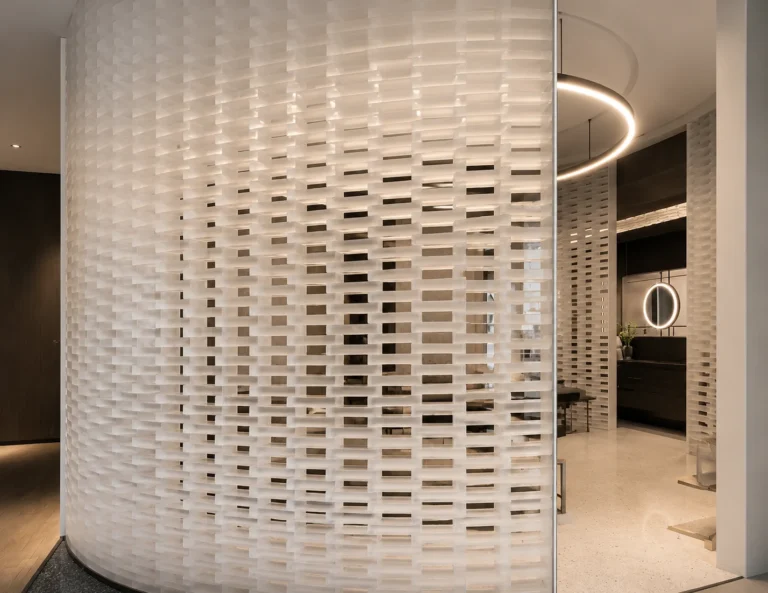
Curved glass brick is less common, but it can be useful in hotels, spas, retail spaces and restaurants where a straight wall feels too rigid. It allows a wall or column to become part of the spatial movement.
4. Installation Details Matter: Adhesive, Joints, Edges And Reinforcement
Glass brick walls are usually installed on site. A metal frame can be used, but it is not always required. More important questions include wall height, floor and ceiling conditions, edge finishing and the installation sequence.
Customers often worry about stability. The wall can be more reliable when the project reviews these details early:
- Use the right high-transparency glass adhesive. This is different from ordinary silicone. Clarity, bonding strength and final appearance all matter.
- Do not install too fast. A glass brick wall should be built gradually according to proper installation guidance.
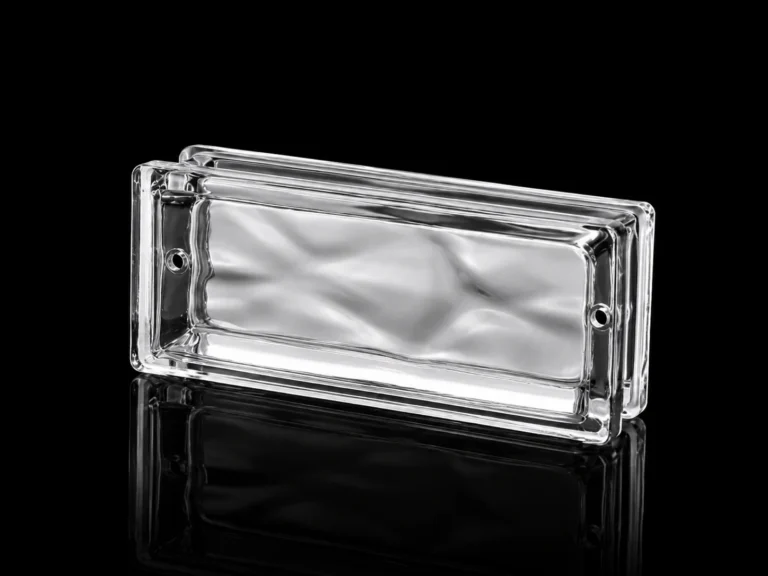
- Add hidden reinforcement if needed. Some bricks can be made with openings so a metal rod can pass through the wall and improve stability.
- Allow for adhesive joints. The wall should not be specified with dimensions that are too tight.
- Plan the edge condition. Half bricks, custom cutting, side closure, plaster finish or other edge details may be needed.
This is why a glass brick project should not be judged only from product photos. Site dimensions, wall height, edge details and installation conditions all affect the final result.
5. Packing And Spare Bricks Are Part Of The Project
Glass brick is a fragile material, so export packing should be planned carefully. Cartons and pallets are commonly used, with proper separation and protection. For overseas projects, it is practical to reserve extra bricks for breakage, cutting or site adjustment.
If the wall needs half bricks, top adjustment or edge cutting, the site should be measured clearly before production. Some parts can be customized in advance. Other parts may need installation allowance and final site closure.
A successful glass brick wall project is not only about the beauty of the block. It also depends on measurement, packing, site installation and edge finishing.
6. What To Send For A Custom Glass Brick Wall Inquiry
For a hotel, restaurant, spa, villa or commercial glass brick wall project, send these details first:
- Reference image or preferred design direction.
- Wall width, height, approximate thickness direction and quantity.
- Application area, such as lobby, restaurant, private dining room, spa, reception, corridor, bar or feature wall.
- Site photos or layout drawings, especially floor, wall, ceiling and edge conditions.
- Preferred transparency, color, texture and privacy level.
- Whether the project needs a curved wall, column, half-height wall, backlighting or special edge closure.
- Project country or region, so packing and shipping can be reviewed.
The customer does not need to prepare every technical detail at the beginning. With a reference image, basic dimensions and site conditions, LMC can review the product direction, installation logic and next catalog or quotation step.
7. Start With Gallery And Catalogs, Then Move Into Project Review
Glass brick walls are highly visual products. Customers usually need to see images and catalogs first. A stronger Gallery helps them decide whether they are looking for a full wall, partition, feature wall, bar front or backdrop.
But Gallery is only the starting point. Once the direction is clear, the next step is to send dimensions, site photos and project needs to LMC. Then the wall can be reviewed from material, texture, installation, edge finishing and export packing.
View more glass brick wall ideas in the Gallery, compare details on the Crystal Glass Brick Walls product page, request the relevant Catalog, then send your reference image, wall dimensions and site photos through Contact for project review.
FAQ
Is a glass brick wall suitable for hotels and restaurants?
Yes. Glass brick walls are suitable for hotels, restaurants, spas, retail spaces and reception areas where light, texture and partial separation are important.
What is the difference between glass brick and glass block?
Customers often use both terms. In many searches, glass block is a common building-material term, while glass brick or crystal glass brick may be used for decorative and custom interiors. The project requirement matters more than the exact wording.
Can glass brick walls be customized?
Yes. Texture, color, transparency, openings, curved forms and edge conditions can be reviewed according to the project. Final feasibility depends on the dimensions and installation method.
Does a glass brick wall need a metal frame?
Not always. A metal frame can be used, but many glass brick walls rely more on correct adhesive, joint planning, edge closure and site installation. Some projects may add hidden rods or other reinforcement.
What should I send before requesting a quotation?
Send reference images, wall dimensions, site photos, application area, preferred transparency or texture, and any special requirement such as curved walls, backlighting, column wrapping or edge closure.