Specification GuideUpdated July 2026Custom Crystal Screens
How To Specify Custom Crystal Screen Systems Before Quotation
A reference image can start a crystal screen project, but a useful quotation needs more than a beautiful direction. Dimensions, site photos, fixing logic, pre-assembly and export packing should be reviewed together before production planning begins.
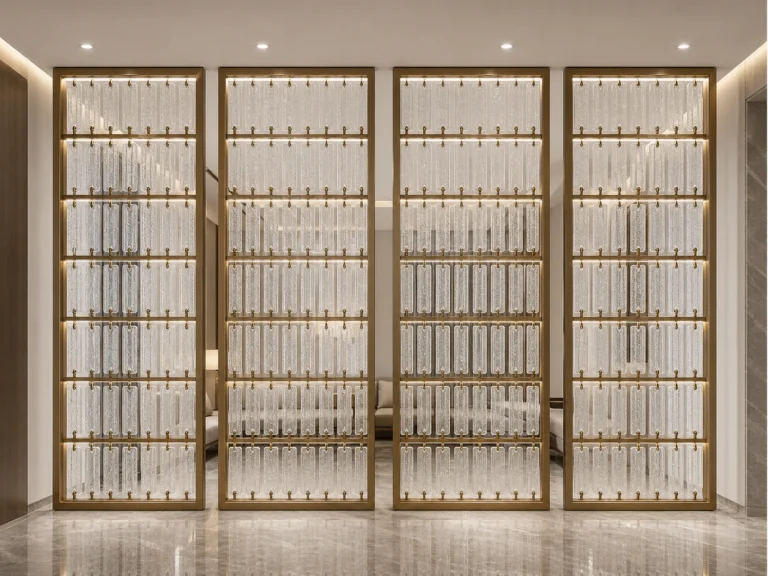
Many buyers begin a custom crystal screen project by sending a reference image or selecting a direction from a catalog. That is a normal starting point because a crystal screen is first understood visually. The client usually knows what atmosphere they like.
Once the project moves toward quotation, however, the most important questions become practical: can the size be made, how should the screen be fixed, should it be divided into sections, which parts can be pre-assembled, which parts should be assembled on site, and how should crystal and metal be protected for export shipping?
This guide is written for designers, contractors, hotel or villa project buyers, and commercial interior teams who want a faster and more useful first review from LMC Crystal.
1. Start With The Reference Image, But Do Not Stop There
A reference design is useful because it tells us the visual direction. It can show whether the project is closer to a framed crystal screen system, hanging crystal elements, a crystal block wall direction, or a mixed crystal and metal solution.
But a reference image alone cannot finish a quotation review. The first practical detail is size. Width and height affect whether the screen can be made as one panel, should be divided into several panels, needs a stronger metal frame, or should be handled as a site assembly system.
Before asking for a quote, try to prepare these basic details:
- Reference image, catalog direction or preferred product style.
- Approximate width, height and quantity.
- Installation position, such as lobby, restaurant, private room, stair area, reception area or villa interior.
- Site photos showing the floor, wall, ceiling and surrounding space.
- Drawings or layout plans if they are available.
Among these details, site photos are often especially important. Buyers usually provide dimensions, but without the installation position and site condition it is hard to judge fixing method, segmentation and safety.

2. The Supplier Should Not Decide The Style For You, But Should Judge Feasibility
The beauty of a crystal screen is subjective. In most projects, the client or design team first chooses a style from a catalog, moodboard or reference project. The supplier does not need to decide which effect is the most beautiful for the space.
The supplier’s real role is to review whether the preferred direction can be built safely and reasonably. The same visual idea may need a metal outer frame, top and bottom support, wall fixing, ceiling rods, steel cables or a freestanding structure. Some designs are better as a complete framed screen; others are better handled as hanging crystal elements or crystal block walls.
This is the difference between a picture and a project. A picture can show the mood. A project review must also check structure, transport and installation sequence.
3. Confirm Metal Frames And Fixing Details Early
Crystal is the visual focus, but the metal structure is what makes the screen practical. Before quotation, the project team should at least confirm whether the screen is fixed to the floor, wall, ceiling, side structure, or whether it needs an independent freestanding frame.
The outer frame should also be reviewed early. Some designs need a visible frame to keep the whole system stable and accurate. Other designs can use a lighter or more hidden metal route. LMC Crystal can review crystal direction and metal fixing systems together so the decorative effect and construction logic do not fight each other.
Metal color and finish may not be as dominant as the crystal, but they still affect the final material feeling. Remote color review can be difficult, so a small swatch photo or short video from different angles is often more useful than one flat image.

4. Decide What Can Be Pre-Assembled And What Should Be Assembled On Site
More pre-assembly is not always better. For crystal screen systems, the decision depends on size, weight, structure, transport position and site handling risk.
As a practical reference, if one screen panel is about 1.5 meters wide or less and about 4 meters high or less, and the weight and structure are manageable, a higher level of factory pre-assembly may be possible. This can make site installation clearer and reduce the interpretation burden for the contractor.
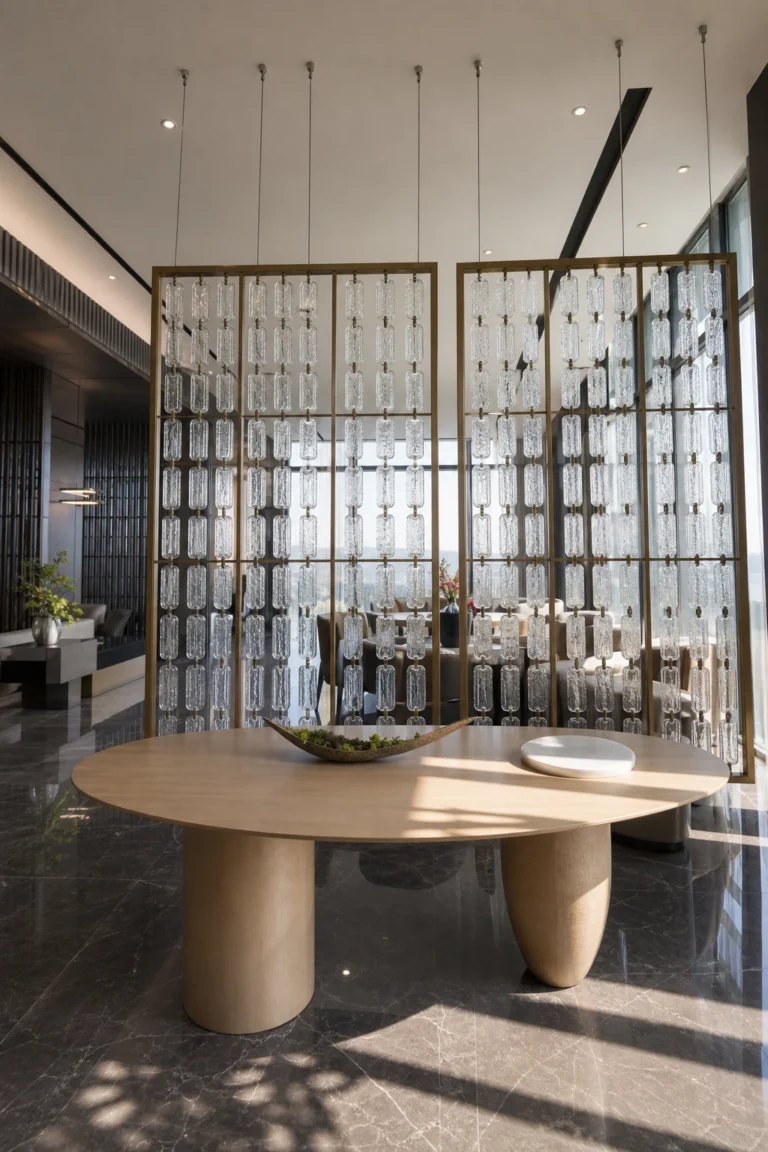
If the size is larger, or if the crystal elements are heavy, the decision should be more careful. For steel cable, rod-hung or flexible hanging systems, the final vertical installation position is different from the horizontal shipping position. During transport, crystal pieces may touch each other if the system is fully assembled too early.
Another common issue is weight. A screen can sometimes be assembled in the factory, but become difficult or unsafe to lift into position at the site. In that case, step-by-step site assembly may be more reasonable.
LMC Crystal will usually try to test-assemble or partially pre-assemble the system in the factory where suitable. Photos or videos can then be provided as a reference, so the site team understands the logic instead of receiving only loose parts.
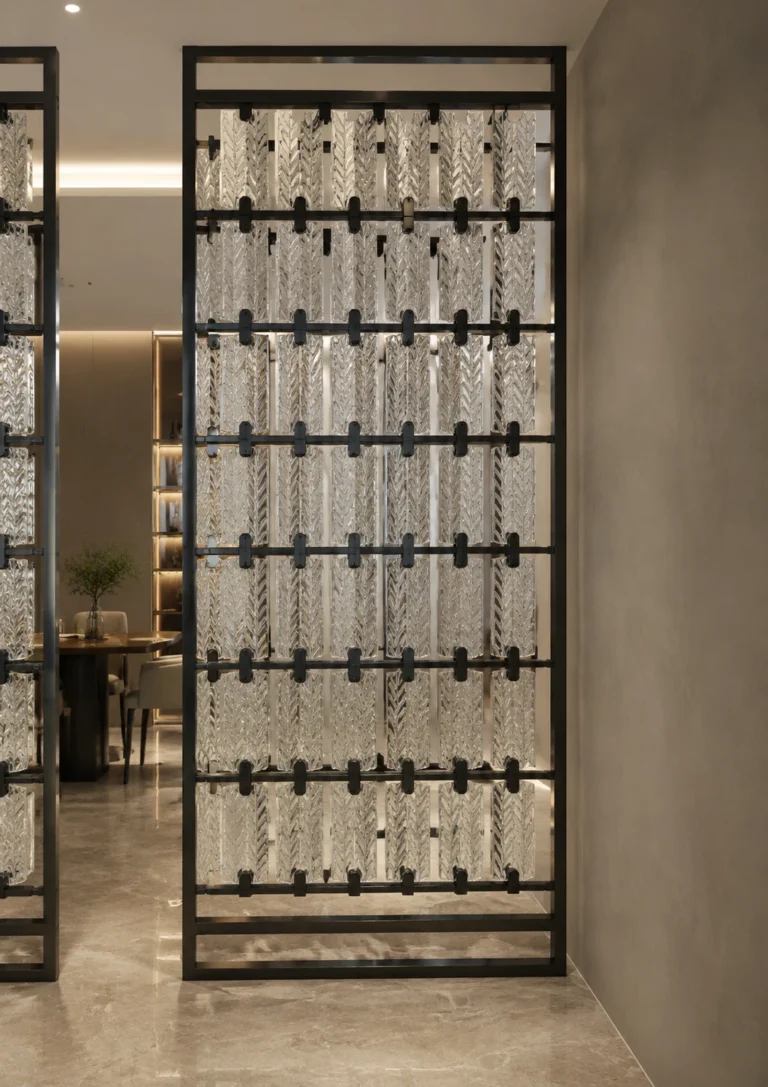
5. Export Packing Must Protect Both Crystal And Metal
Crystal is fragile. Metal is hard and heavy. When both materials belong to one screen system, packing cannot be judged only by thickness of foam or crate size. It must also separate contact points, reduce pressure and make site sorting easier.
For export packing, the project team should pay attention to:
- Protection between crystal units to avoid direct collision.
- Separation between metal frames, connectors and crystal parts.
- Clear grouping and labels for different components.
- Packing sequence that supports the installation sequence when possible.
- Wood crate, foam, corner protection and fixing method based on weight and shipping route.
Good packing should not be an afterthought. It should be considered while the screen is being designed and pre-assembly is being reviewed.
6. A Simple Inquiry Checklist Before Quotation
If you are preparing a custom crystal screen project for a hotel, restaurant, villa or commercial interior, send these details first:
- Reference image or catalog style direction.
- Approximate width, height and quantity.
- Installation position and site photos.
- Whether the screen should be fixed to the floor, wall, ceiling or stand independently.
- Preferred metal color or finish direction.
- Project country or region for packing and shipping review.
- Drawings if available.
You do not need to prepare every engineering detail at the first contact. With reference design, basic size and site information, LMC Crystal can make an initial judgment on product route, feasibility and next shop drawing direction.
7. How LMC Crystal Can Help At This Stage
LMC Crystal’s advantage is not only the range of crystal choices. It also comes from metal fabrication support, fixing route review, pre-assembly testing, export packing planning and installation drawing or video support where needed.
For custom crystal screen systems, we focus on two questions: whether the preferred visual direction can be built in a reasonable way, and how the system should be divided, packed, transported and installed.
If you want to see more real application directions first, start with the Gallery. After the direction is clear, send reference images, dimensions and site photos through Contact, or request a focused Catalog for product selection.
FAQ
What should I send before asking for a custom crystal screen quotation?
Send a reference image or catalog direction, approximate width and height, quantity, installation position, site photos and drawings if available. These details help LMC Crystal review feasibility faster.
Can a crystal screen be made from only a reference image?
A reference image can start the discussion, but dimensions and site conditions are still needed before a useful quotation or shop drawing direction can be prepared.
Should a custom crystal screen be shipped fully assembled?
It depends on size, weight, structure and transport risk. Some smaller framed panels may be pre-assembled, while larger or flexible hanging systems may be safer to assemble on site.
Why are metal frames and fixing details important?
The crystal creates the visual effect, but the metal route decides how the screen is supported, divided, packed and installed. Metal fixing should be reviewed before production planning.