Capability
See How The Crystal System Comes Together.
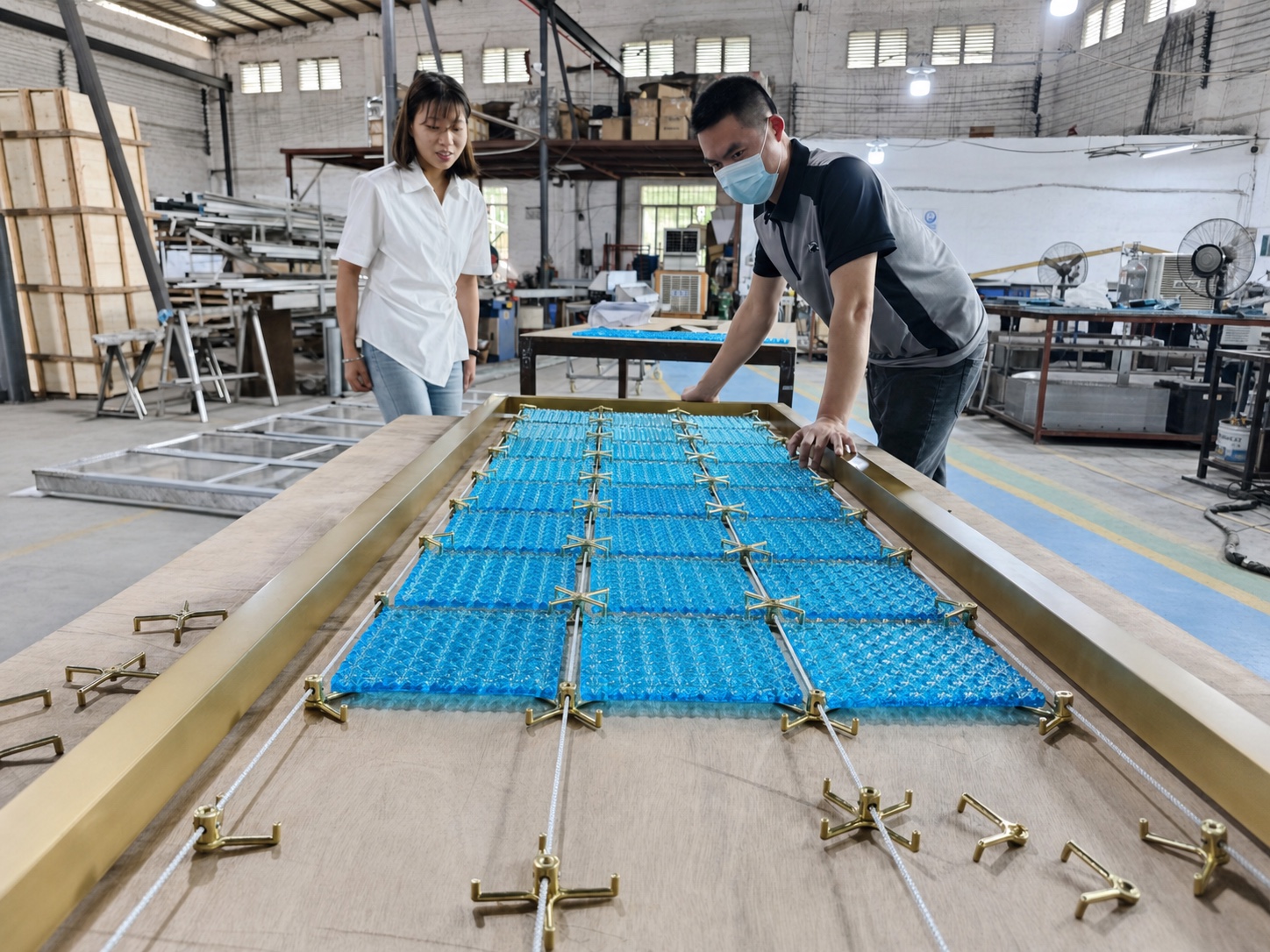
Real workshop assembly and finished project references show how LMC Crystal coordinates crystal modules, metal structure, connectors and installation conditions before delivery.
From Parts To System
Capability Is Visible In The Assembly.
Beautiful crystal is only one part of the result. Frame dimensions, connector positions, module spacing and installation access have to work together before the system is ready for a project.
System Layout And Pre-Assembly
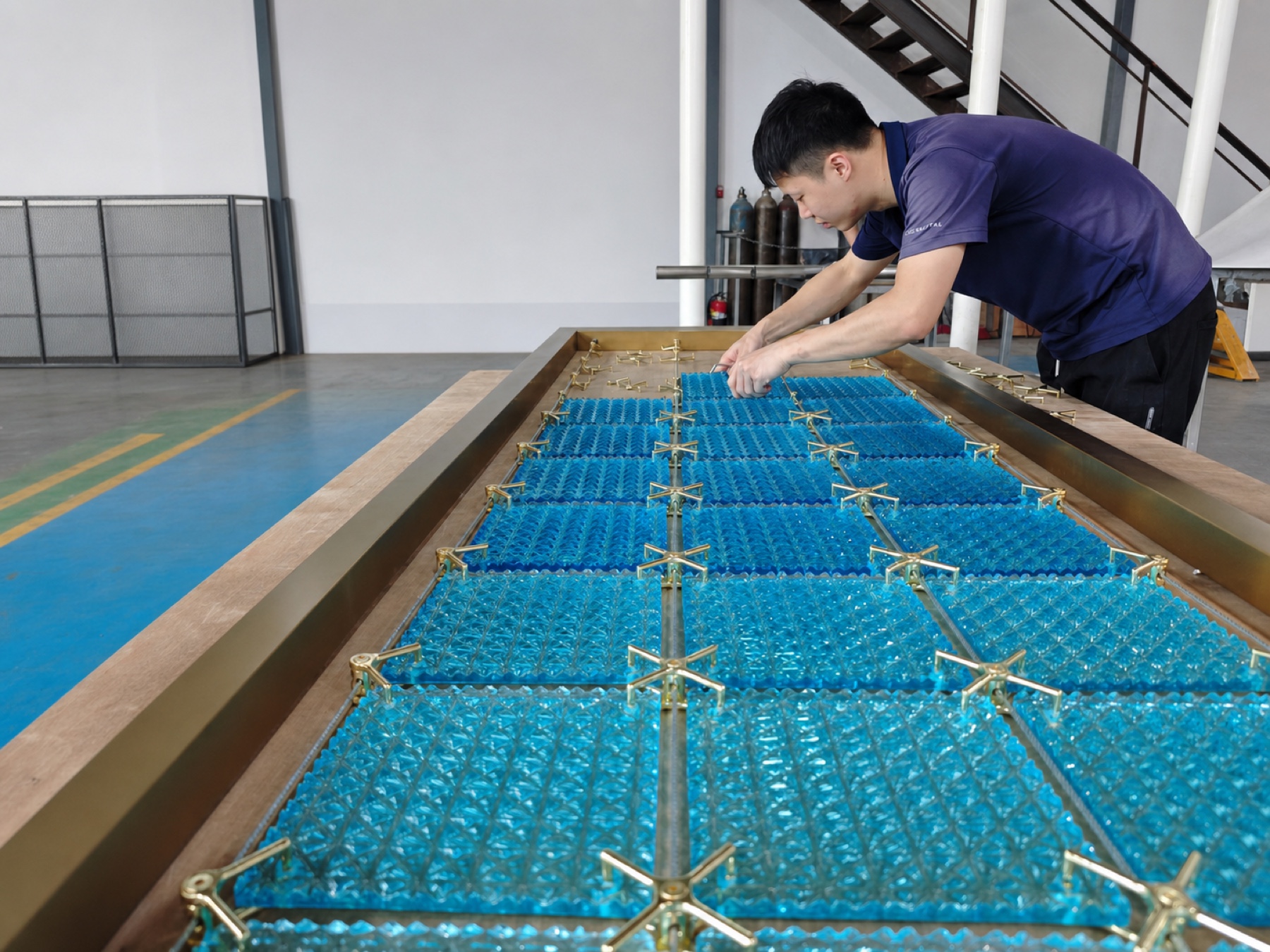
Crystal modules, cables, connectors and the metal frame are checked together at working scale.
The Same Logic In A Finished Setting
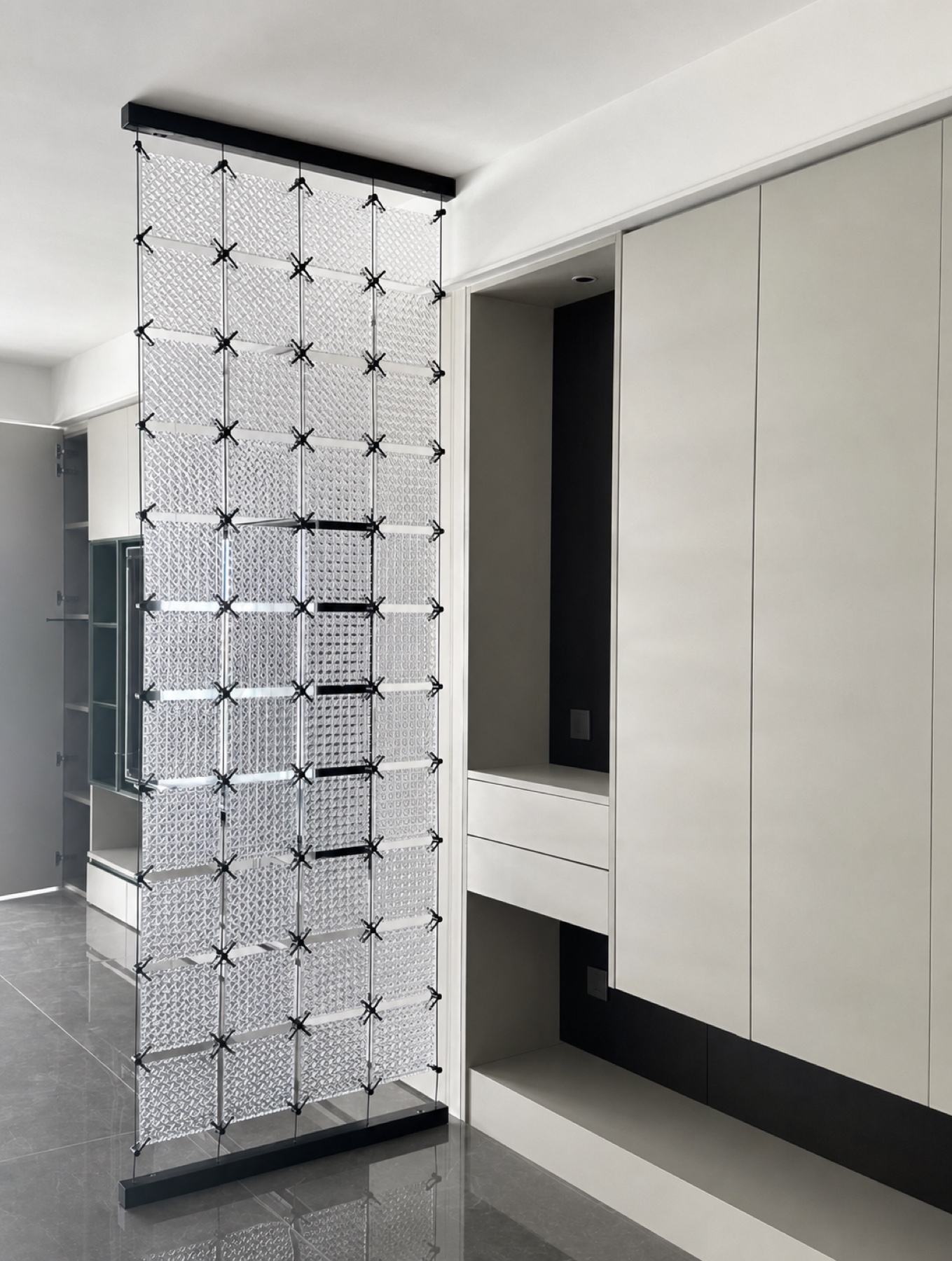
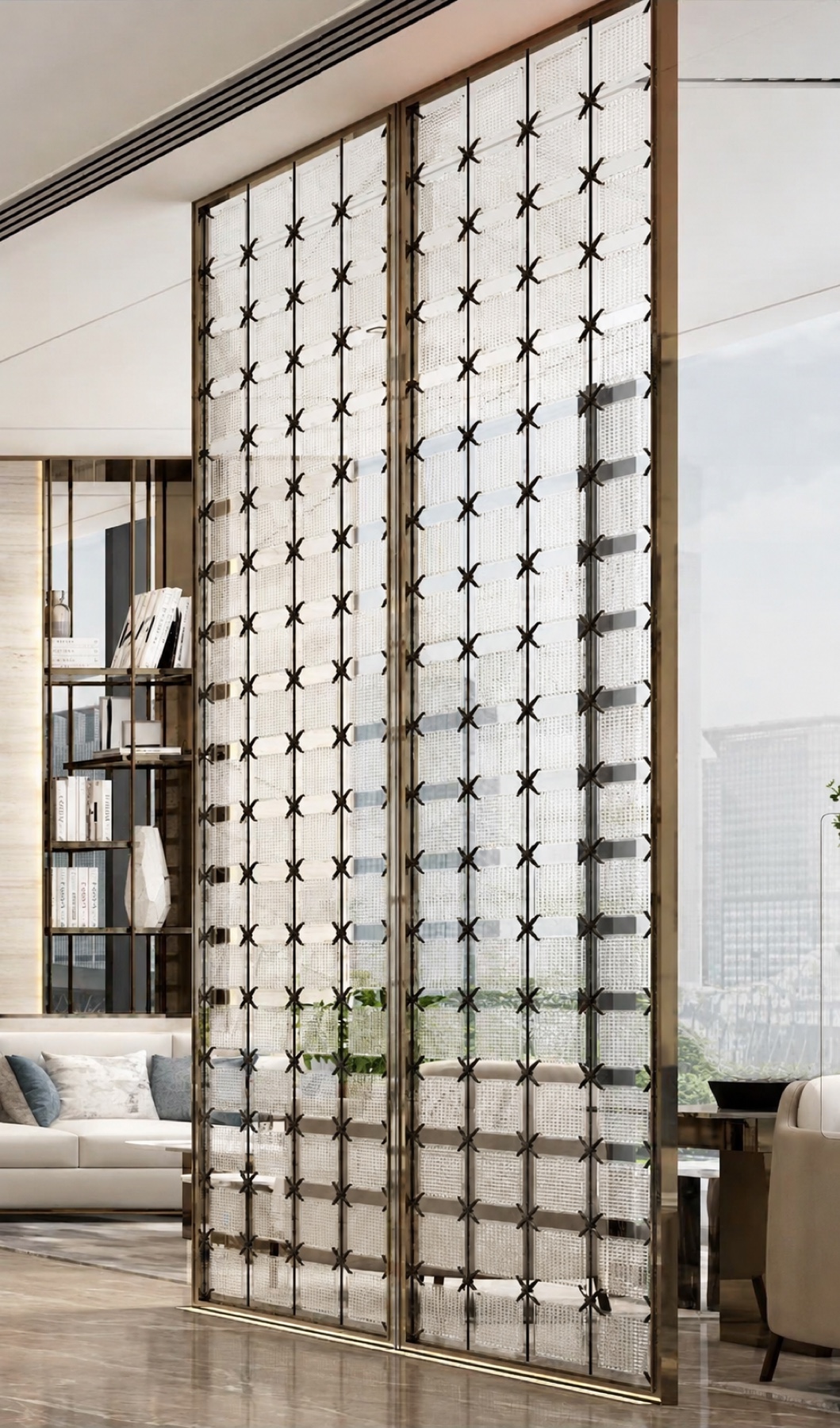
Module rhythm, fixing points and edge conditions remain visible in the final application.
About LMC
Built On Metalwork And Art Glass Experience Since 2014.
Since 2014, LMC has worked with metal and architectural art glass for custom interiors. That cross-material experience gives our team a practical understanding of how crystal, metal structure and decorative glass need to meet in a finished space.
With our own production facilities and an experienced workshop team, we coordinate material selection, metal fabrication, detail review, factory pre-assembly, quality control and export preparation within one project workflow.
Today, LMC supports designers, contractors and project buyers across international markets. Each project is reviewed around its dimensions, finish direction, installation conditions and delivery needs.
Inside The Build
Critical Details Are Reviewed Before Delivery.
Workshop assembly gives the project team a practical point of reference for the frame, connector route, spacing and visible finish before the system reaches site.
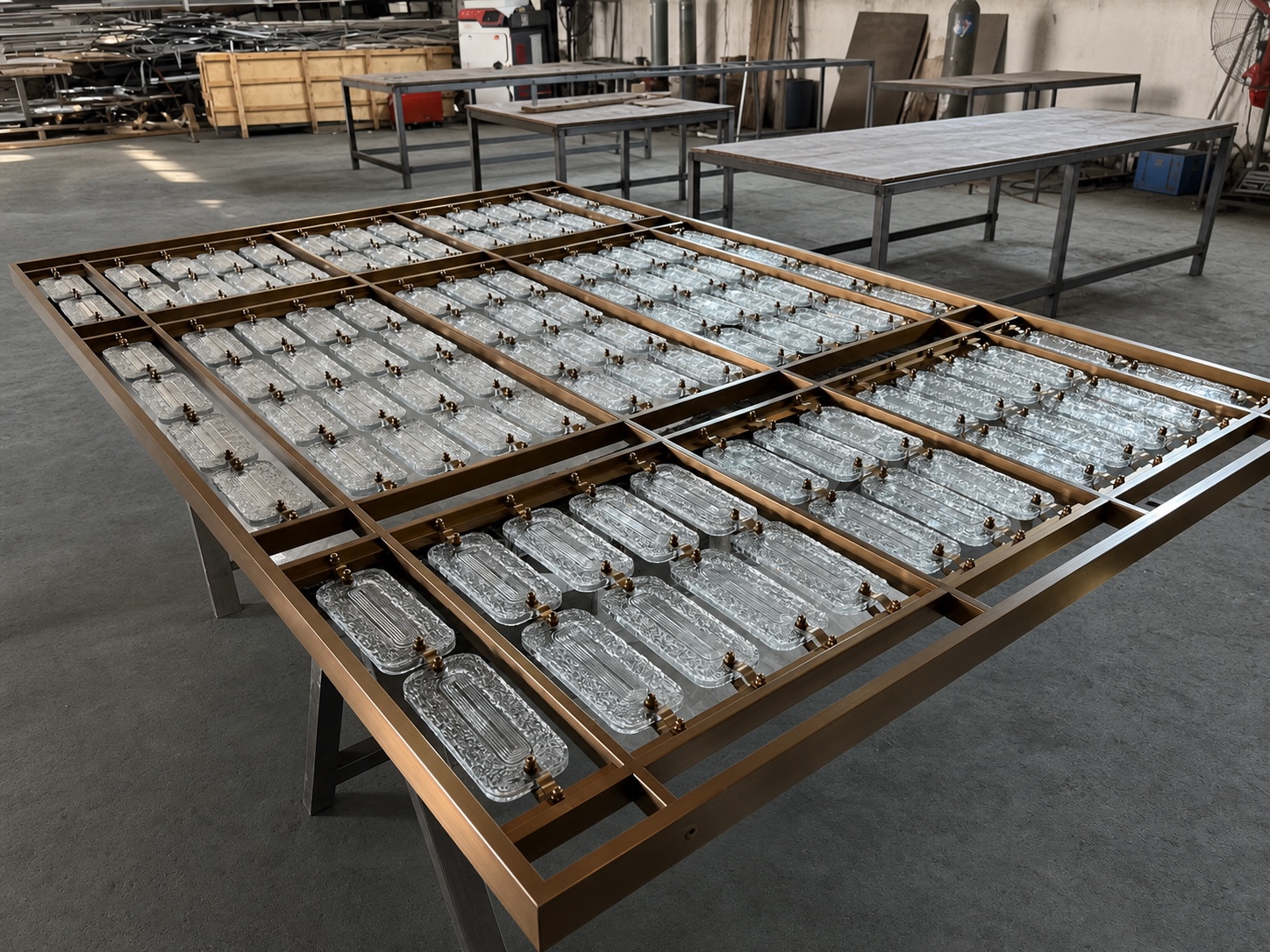
Frame, Rails And Crystal Elements
A completed workshop layout makes alignment, fixing positions and repeated details easier to review.
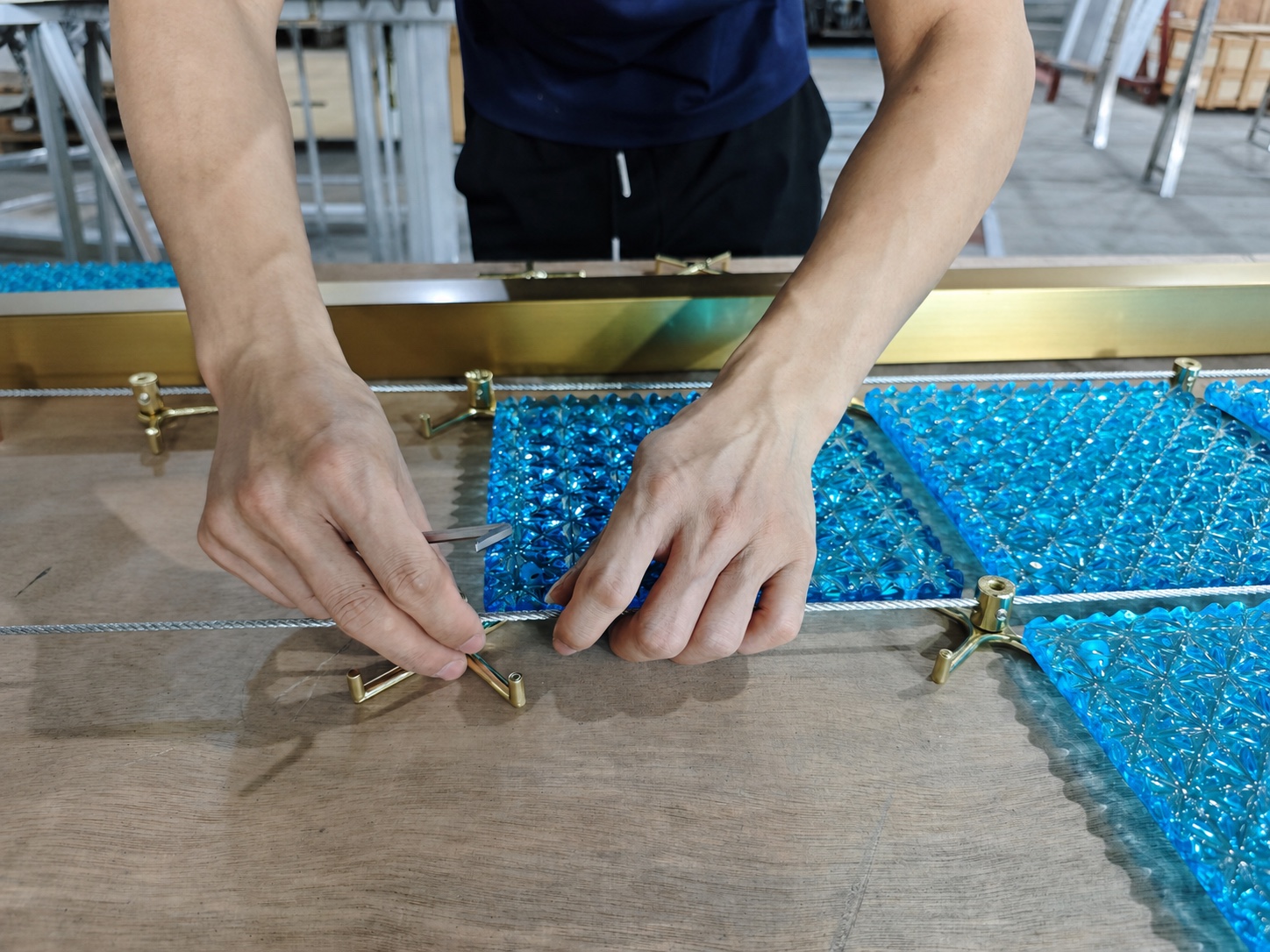
Connector Positioning
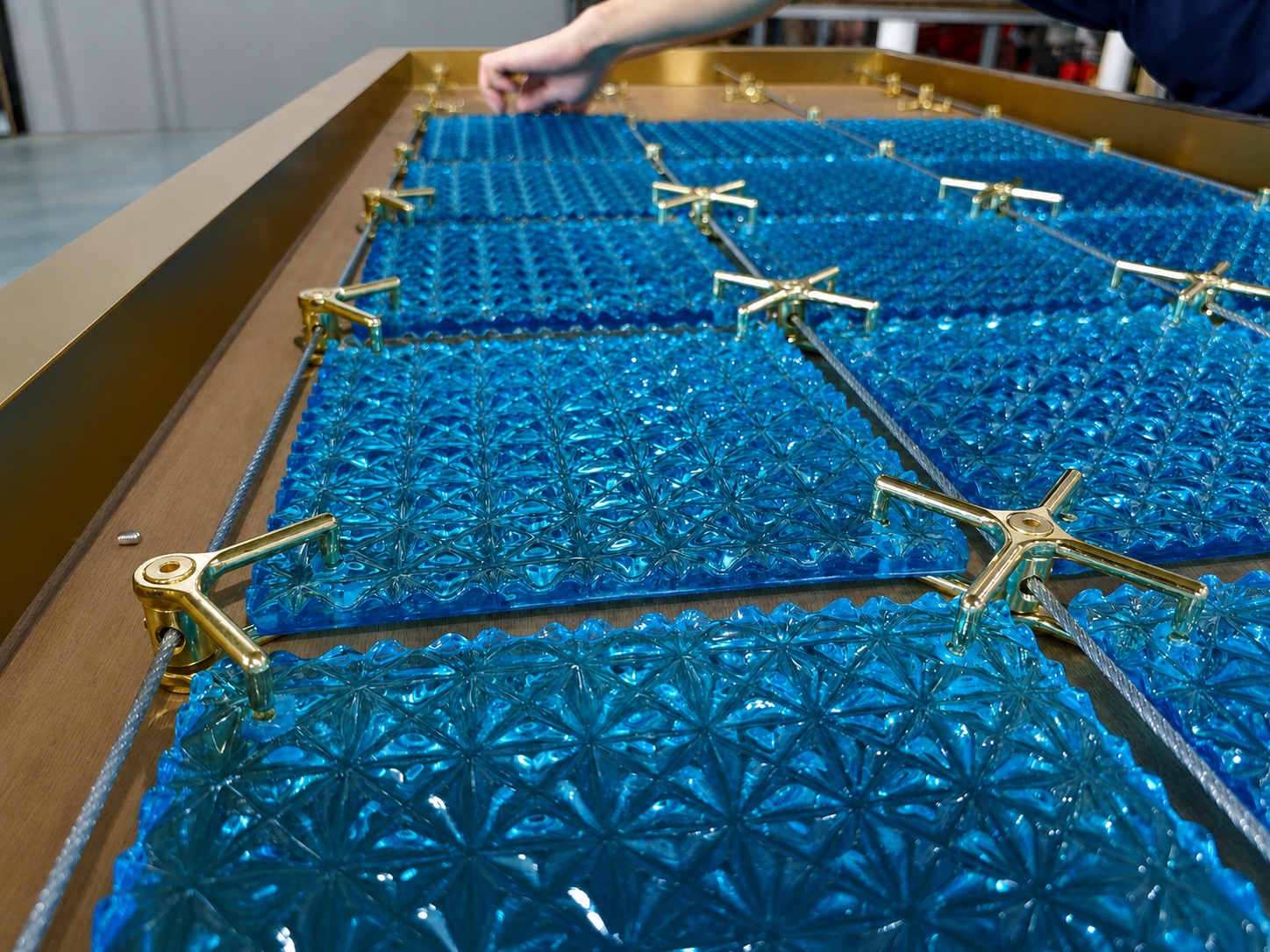
Spacing And Module Alignment
Frame Set-Out
Review the overall opening, border, internal rails and visible metal finish.
Fixing Position
Coordinate the connector route with the crystal shape and intended pattern.
Module Rhythm
Check repeated spacing, edge gaps and visual consistency across the system.
Access + Replacement
Discuss how parts are reached, adjusted or replaced where the route allows.
System Components
The Connection Hardware Is Part Of The Design.
Crystal modules do not work alone. Cables, clamps, anchors and adjustable fittings are selected around the module format, finish direction and supporting structure.
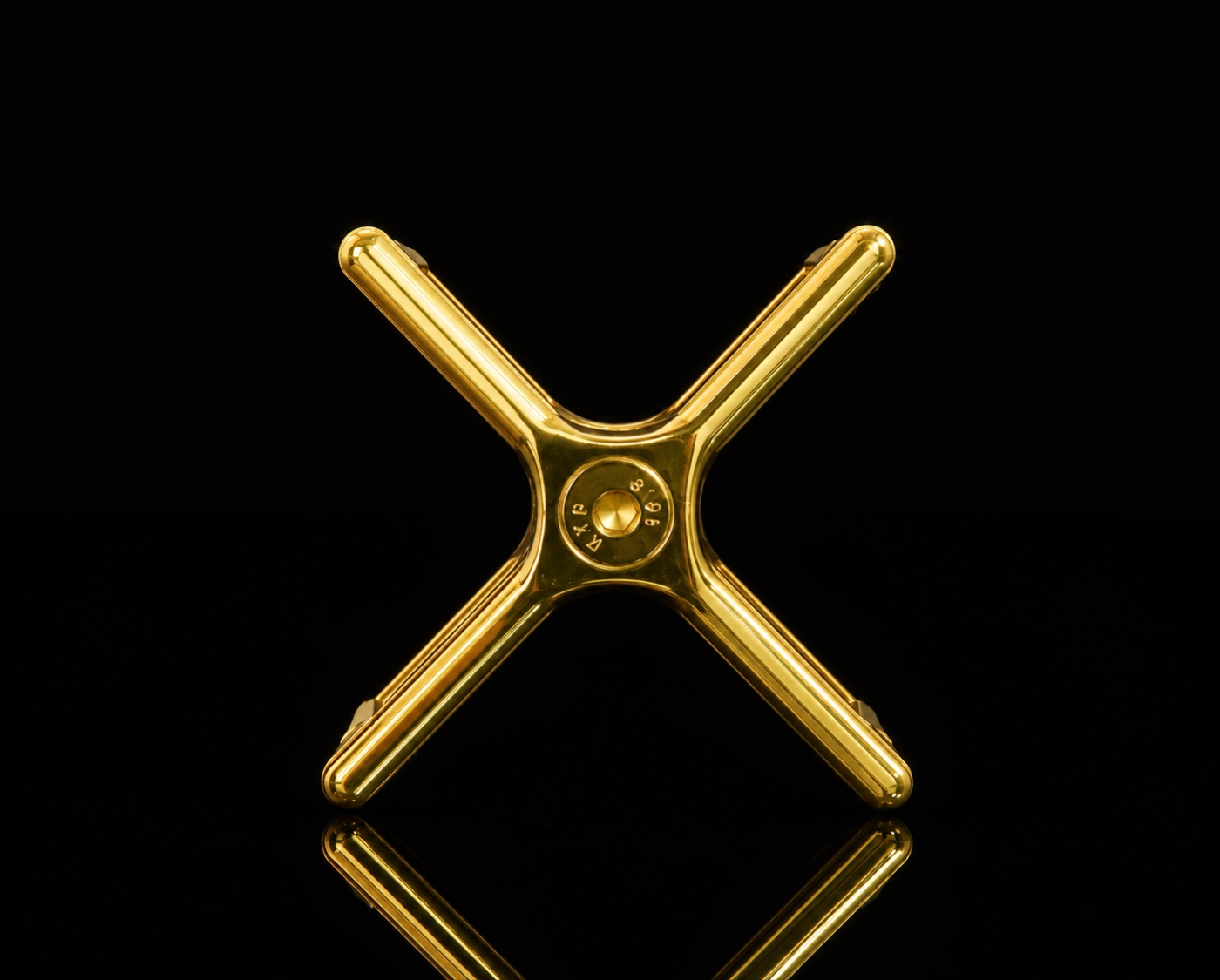
Four-Arm Connector
Supports repeated connection points between adjacent crystal modules.
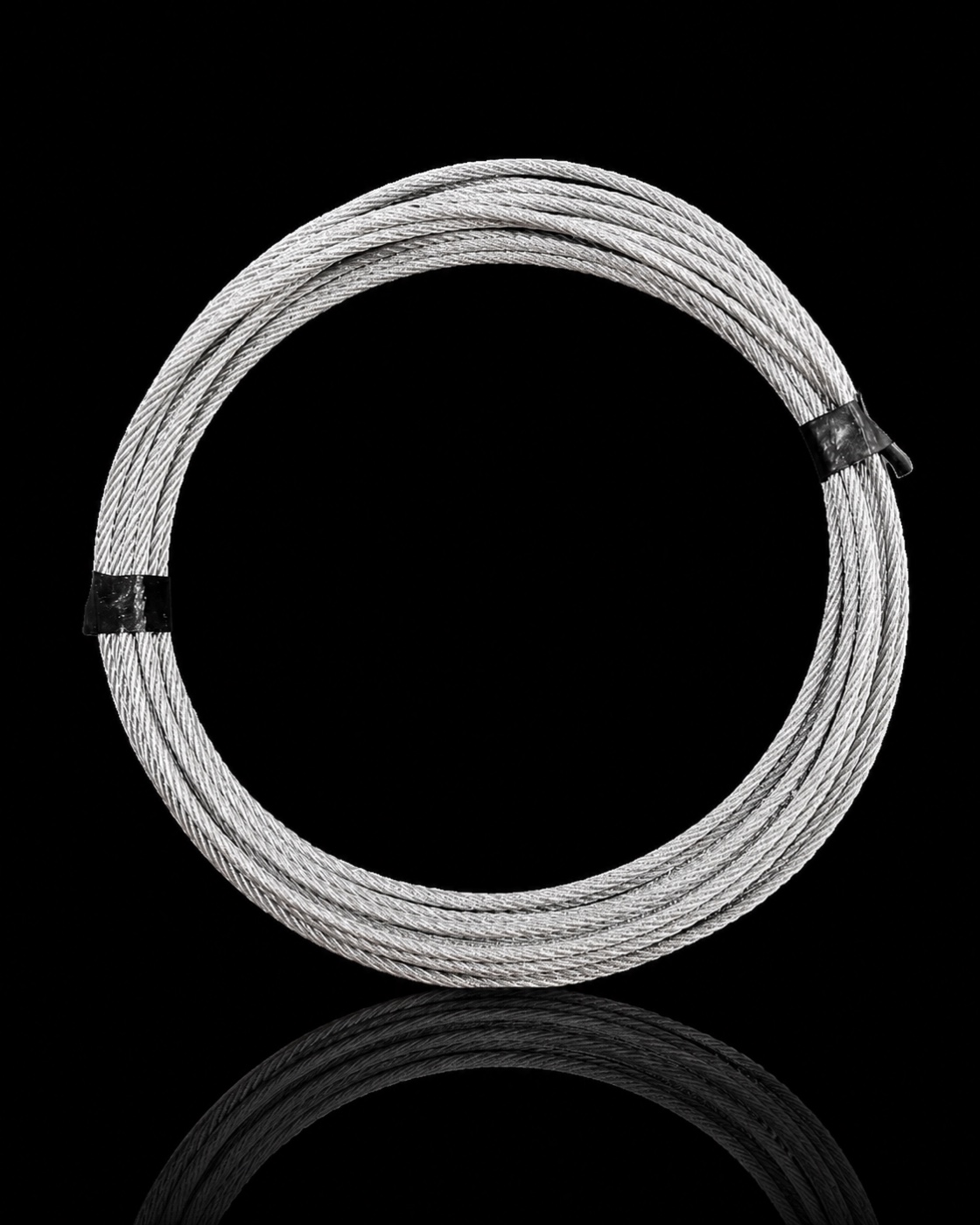
Stainless-Steel Cable
Provides a controlled support line where a cable-based system is specified.
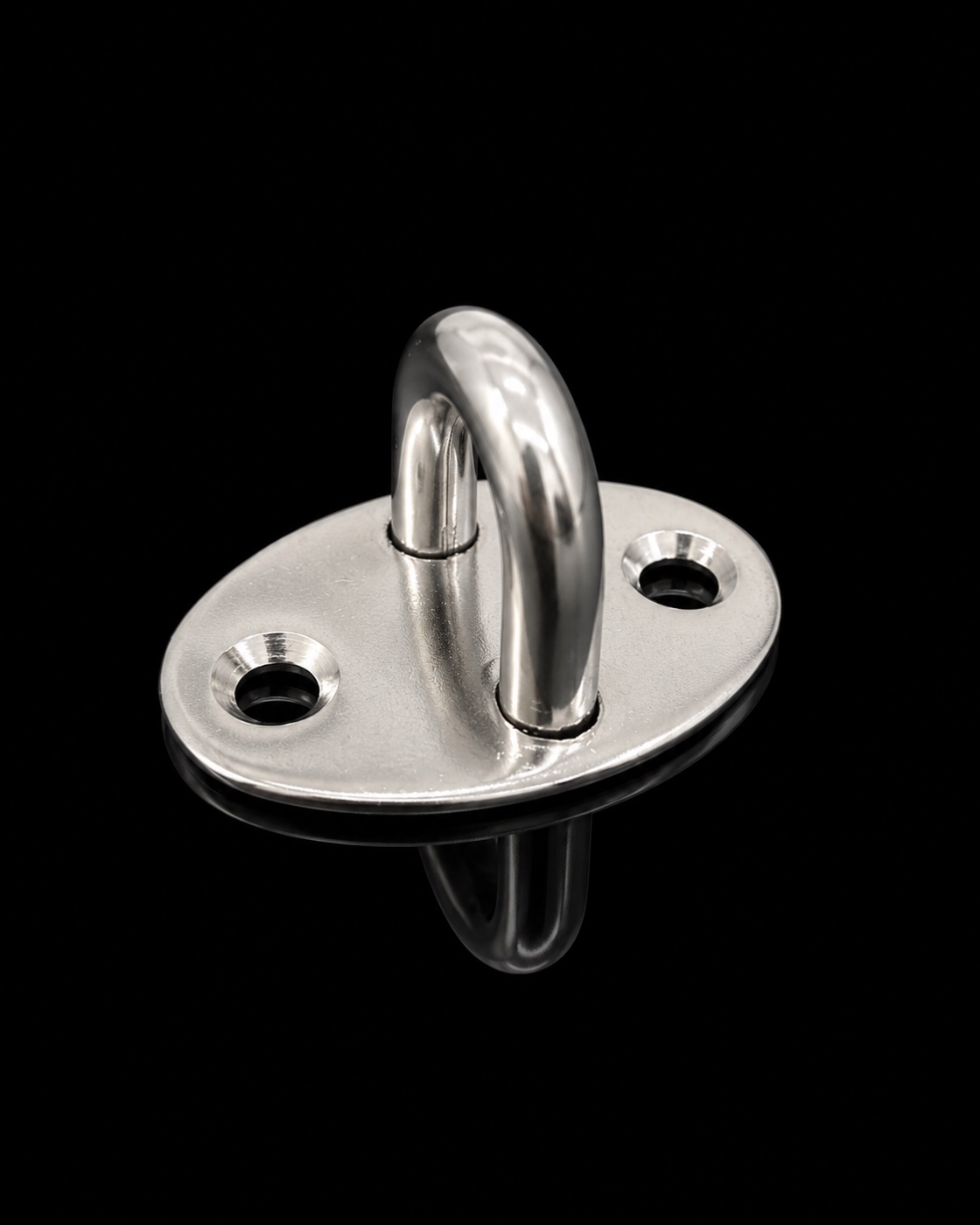
Anchor Plate
Creates a defined attachment point at the frame or supporting surface.
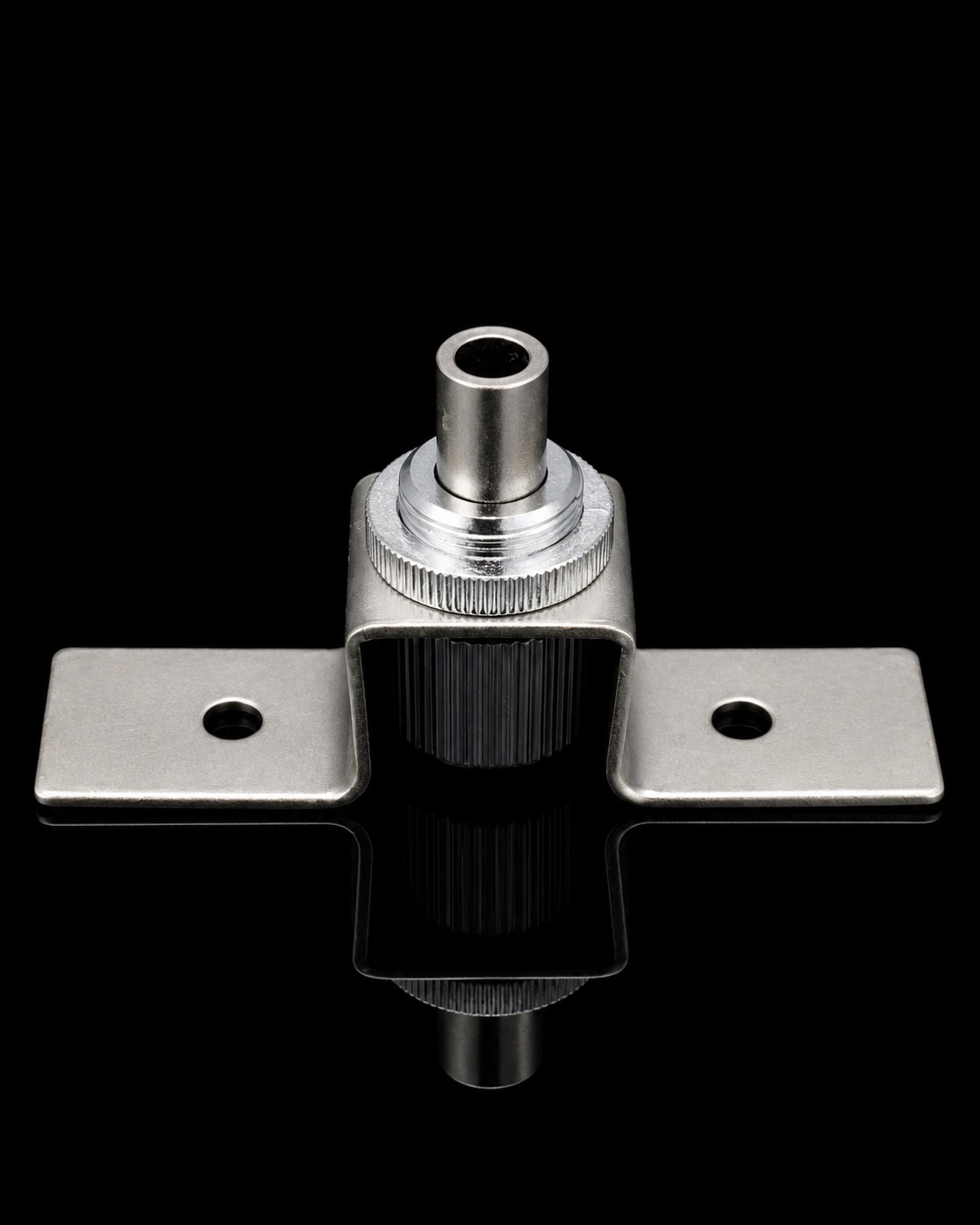
Adjustable Mount
Helps coordinate cable position and adjustment at the support edge.
Exact component type, size, finish and fixing method are confirmed for each project. These examples show available system directions rather than one universal kit.
Different System Routes
The Product Form Changes The Support Logic.
Modular panels, linked hanging pieces and multi-face dividers do not use one universal detail. The product direction and the installation condition are reviewed together.
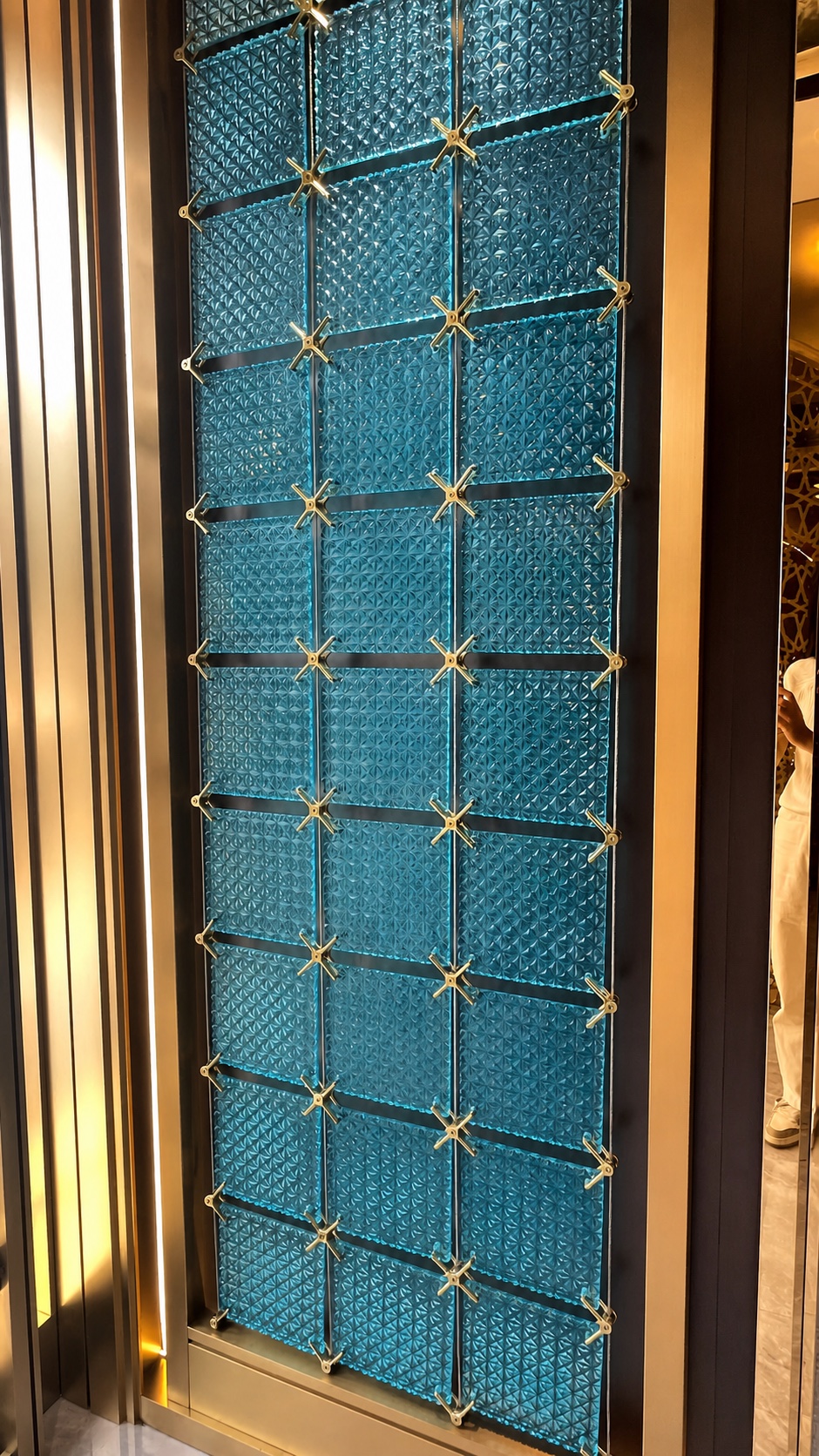
Repeated Modules + Point Fixings
Panel size, joint spacing, connector position and the surrounding frame define the visual rhythm.
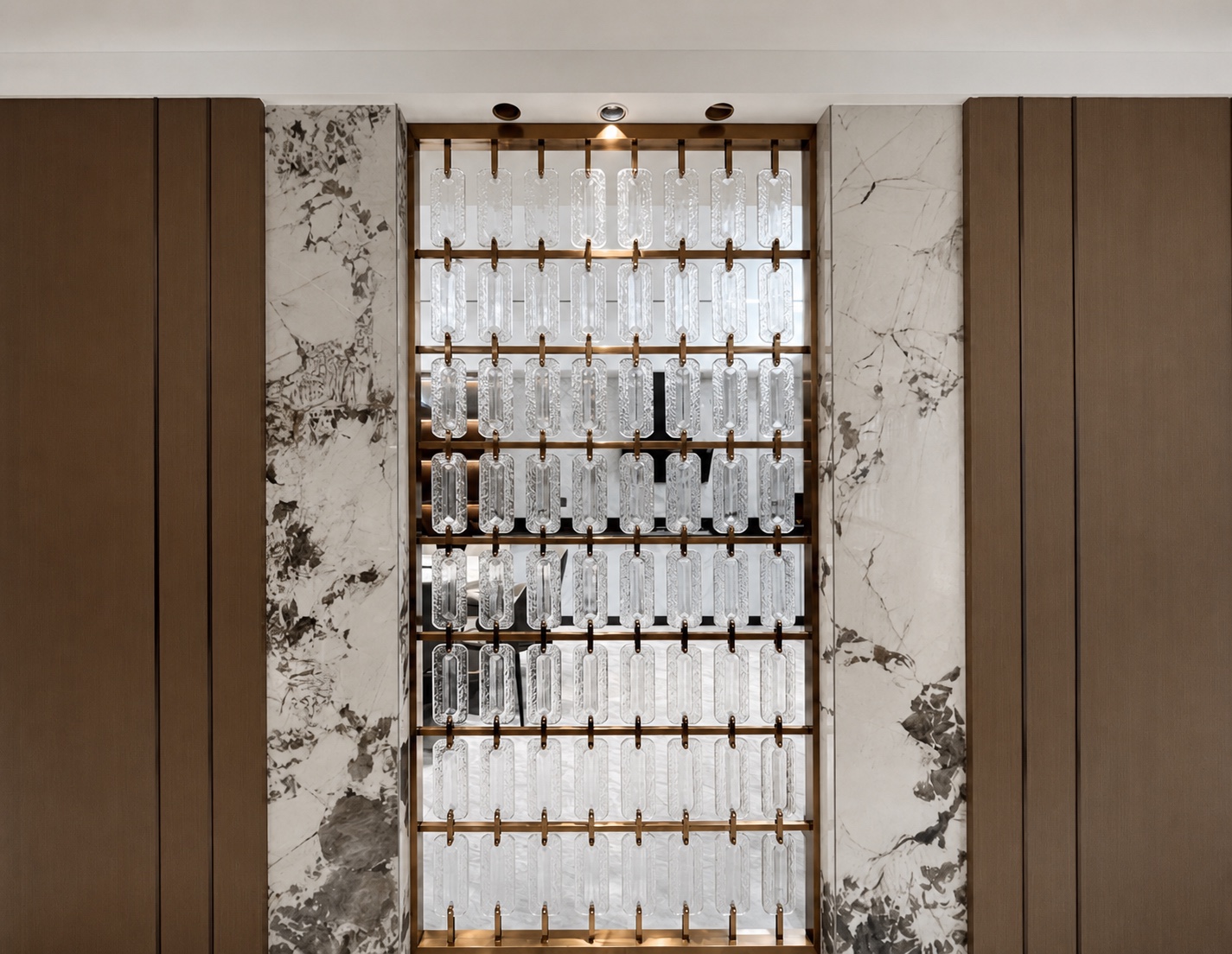
Repeated Elements + Metal Rails
Rows, hanging points, rail spacing and access are coordinated as part of one assembly.
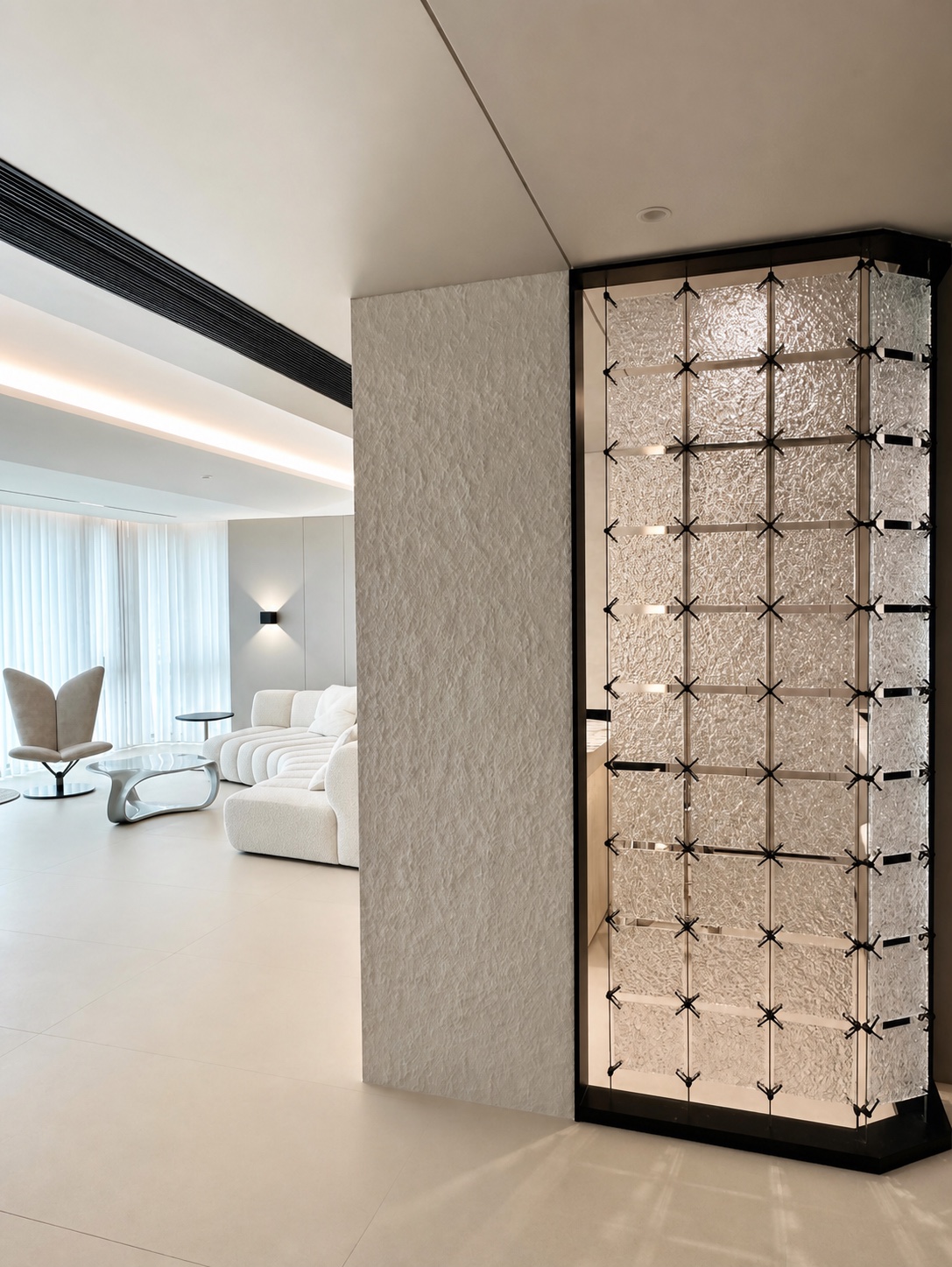
Corner Transitions + Edge Conditions
Multiple faces introduce additional decisions around structure, alignment and finishing at each edge.
Project Route
What Happens After You Contact Us.
The first goal is not to force a standard product. It is to narrow the product and support route until the project team has enough information for a useful quotation and next-step discussion.
Share Context
Send the space type, dimensions, country, schedule and target effect.
Choose Direction
Compare crystal forms, colors, transparency and the intended pattern.
Review Support
Discuss frame, rails, cables, brackets, connectors and edge conditions.
Confirm Details
Align sample needs, visible finish, quantity, QC focus and production notes.
Prepare Delivery
Plan protection, grouping, labels and project delivery information.
Start With Useful Information
A Clear Brief Creates A Better First Reply.
You do not need a finished technical package to begin. A few practical project details are enough for us to identify the main questions and recommend the next route.
What To Send Us
Project Inputs
Share what is already available. Approximate information is acceptable for the first review.
- Plan, elevation, opening size or approximate dimensions
- Reference images and the crystal effect you want to achieve
- Preferred crystal color, metal finish and quantity or area
- Project country, target schedule and delivery requirements
What We Clarify
Review Output
Our first response is designed to move the project toward a useful quotation or sample discussion.
- Recommended product family and system direction
- Key dimensions, site conditions and decisions still to confirm
- Relevant metal support and fixing discussion points
- Recommended next step for samples, quotation or detail review
Start Your Project Review
Send The Details That Shape The Crystal System.
Tell us the project type, approximate size, preferred crystal effect, metal finish direction, quantity or area, destination and target schedule.